
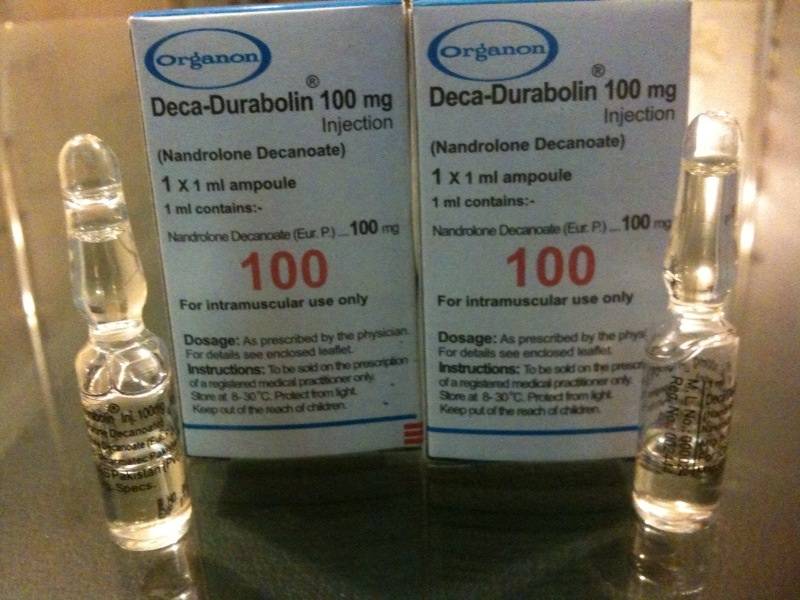
Drug testing using IOC standards is far from perfect. For more than two decades I have criticized the short sightedness of the IOC drug testing standard bearers. And much of what I said in that period of time has turned out to be right. Among many others, I criticized, right from the start, the flawed testosterone/epitestosterone ratio used for detecting the use of exogenous testosterone. And changes were subsequently made to correct some, but not all, of the deficiencies.
Over the past two decades I’ve also agonized over the nandrolone issues. In the Second Update to my Drug Use and Detection in Amateur Sports, published in 1986, I wrote:
Over the past few years an increasing number of athletes, especially powerlifters and weightlifters, have tested positive for nandrolone (19-nortestosterone), even though they have been repeatedly warned not to use this compound.
There have been many cases of athletes who tested positive for 19-nortestosterone but who had not used any nandrolone for as much as a year before the drug tested meet. It is difficult to believe that a drug could be reliably detected by our present methodology (selective ion monitoring/gas chromatography/mass spectrometry) up to a year after it was last used.
It would appear, however, that in the case of a nandrolone ester, because its excretion after some weeks does not follow a simple first order kinetics, very low levels of the compound and its metabolites are present in the body (and subsequently in the urine) many months after it is last injected. The recent improvements in the purification, isolation and analysis of urine specimens make it possible to identify these low levels of nandrolone in urine samples. Because of this excretion pattern, however, it is also impossible to calculate the retrospectivity of the analytical method.
In the past eight years there have been many documented instances of athletes who, on being confronted with a positive doping test for 19-nortestosterone, at first denied that they used it and later admitted to its use some months prior to the drug tested event. (I thank Dr. Donike – the director of the Cologne laboratory – for providing me with some of these documented instances.)
On the other hand there are also several documented instances of athletes who have tested positive for nandrolone (19-nortestosterone) but have categorically denied ever taking nandrolone or for that matter any banned performance enhancing drug.
I find it somewhat difficult to explain how nandrolone could be detected in the urine samples of athletes who claim never to have taken the drug. The usual explanations assume that the athlete is either covering up the use of nandrolone, was not aware that he somehow inadvertently took nandrolone or had forgotten that he had used nandrolone many months before the drug tested meet.
It’s theoretically possible that 19-nortestosterone is an intermediate compound in the pathway from testosterone to estradiol, since hydroxylation of the angular 19-methyl group seems to be an essential step in the aromatization process. Although 19-hydroxy intermediates do not normally accumulate under biological conditions, their formation, by inference, occurs in all tissues capable of aromatization. In the human this includes placenta, ovary, testes, fat, hair, skin fibroblasts and possibly liver.
Dr. Kristen B. Eik-Nes in his book “The Androgens of the Testis” has depicted a possible pathway for the production of 17beta-estradiol – this pathway involves several steps including the formation of 19-nortestosterone by the decarboxylation of 19-carboxytestosterone. Another possible pathway might involve the formation of 19-nortestosterone from androstenedione by way of 19-norandrostenedione.
Several years ago it was found that 19-nortestosterone was, contrary to scientific belief, produced endogenously in male horses. Now a ratio is used to detect the exogenous use of 19-nortestosterone in the doping control of racehorses (similar to the ratio used to detect an athlete’s use of exogenous testosterone).
Dr. Donike has been aware of the possibility of the endogenous production of 19-nortestosterone. To date, however, no evidence has been uncovered to show that 19-nortestosterone is produced endogenously, despite the fact that tens of thousands of urine samples have been analyzed since 1980 using capillary column chromatography coupled with mass spectrometry.
There is still the possibility, however, that increasing the sensitivity of a test for a synthetic steroid like 19-nortestosterone, will increase the possibility of detecting trace amounts of the same steroid produced naturally by minor pathways. It is imperative that sizable drug free populations be checked out by any new improvements in techniques. (I have Dr. R.V. Brooks, a chemical endocrinologist at St. Thomas’s Hospital Medical School, to thank for some of the above information on 19-nortestosterone.)
It is also possible that the use of testosterone and/or other anabolic steroids which aromatize, and/or human chorionic gonadotropin (HCG) may increase the endogenous production of estrogens and therefore possibly the intermediate 19-nortestosterone, thus raising the level of endogenously produced 19-nortestosterone above the detection threshold. For example the use of say Dianabol before a drug tested competition might raise the endogenous level of 19-nortestosterone. Thus the athlete might escape detection of the anabolic steroids he was using (if he stopped them early enough) but may be found positive for 19-nortestosterone – even though he may never have used the 19-nortestosterone.
Perhaps the concomitant widespread use of supplements in the sports with the highest incidence of anabolic steroid use (the so called “loaded sports” – powerlifting, weightlifting, bodybuilding and track and field – especially the throwing and sprinting events) may be somehow responsible for increasing endogenous nortestosterone production (possibly as a result of changes in the synthesis, secretion and metabolism of other hormones).
Later on in 1986, in Update Three, I wrote:
The Endogenous Production of 19-nortestosterone
As stated in Update Two there are several pathways by which 19-nortestosterone can be formed endogenously in the human body. Recently studies have shown that 19-nortestosterone is endogenously produced in other mammals besides the horse.
19-norandrostenedione was first isolated from ovarian follicular fluid of horses by R. Short in 1960.1 Recently the presence of 19-norandrostenedione has been found as a major steroid in porcine ovarian follicular fluid,2 with 19-nortestosterone as a minor component4. In the two previous studies it was found that the levels of both compounds were highest in preovulatory and large follicles.
19-nortestosterone was also reported as a minor component in horse ovarian follicular fluid,5 horse testis and pig testis.6
There is one report of the formation of 19-nortestosterone and 19-norandrostenedine from testosterone by baboon placental microsomes.7 There is also another report that 19-nortestosterone can be formed from testosterone by mouse kidney slices.8
Nevertheless, there is still no evidence that 19-nortestosterone is produced endogenously in man – at least not in concentrations that are detectable by present analytical means.
Many studies including two recent ones done in the U.S.9 and U.K.10, have shown that the hydroxylations, oxidation and decarboxylation processes involving testosterone and leading to estrogens, occur at the same or adjacent enzymatic sites, with the intermediates remaining on the enzymes. Any intermediates, such as 19-nortestosterone, would therefore be very short lived and likely would not accumulate in any appreciable concentrations.
Thus it seems that the rapid conversion of 19-nortestosterone prior to tissue distribution and excretion, normally does not allow its detection in body tissues or fluids.
I feel that it is logical to assume that 19-nortestosterone is in fact produced as an intermediate compound in humans but that normally no accumulation of the compound occurs due to the rapidity of the aromatization process.
Or if there is an accumulation then it is likely in amounts which are below the present detection limit, which is about 0.25 nanograms/milliliter of urine for most steroids. At present most laboratories consider a trace to be 2 to 5 times the stated detection limit depending on the compound and the medium being tested.
It is not known, however, if significant accumulation or excretion occurs under certain physiological or pathological conditions.
The dynamics of the system may be such that under conditions where the normal metabolic pathways are disrupted by the presence of exogenous anabolic steroids or by the previous use of exogenous 19-nortestosterone, the aromatization process may be affected in such a way so as to allow significant accumulation and excretion of some 19-norsteroids – perhaps enough to be detected by today’s sensitive techniques.
Thus it is possible that the use of other anabolic steroids can increase the formation of the 19-norsteroids by altering the metabolic transformation of testosterone to estrogen. It is a well known fact that many of the enzymes in the liver and other organs can be increased or decreased by treatment with certain drugs and hormones. This shifting in the enzyme levels can alter the rate of metabolite production of certain intermediate hormones by altering the dynamics of the testosterone-estrogen metabolic pathways – possibly allowing the accumulation (and subsequent tissue excretion) of compounds which under normal circumstances would not accumulate.
Increased or reduced activity of one or more of the intracellular enzymes involved in transformation of testosterone to estrogen might lead to intracellular and extracellular accumulation of immediate or remote precursors of those enzymatic reactions. There is, therefore the possibility of a hormonally induced rise in the production of 19-nortestosterone and its metabolites.
Also it is well known that the end product of a reaction sequence often regulates the activity of other enzymes in a biosynthetic pathway. It is feasible, therefore, that the use of aromatizing anabolic steroids may inhibit one or more of the enzymes involved in the transformation of testosterone (or androstenedione) to estrogen. This end product inhibition may result in product excess (possibly 19-nortestosterone). The reduced activity of one of the intracellular enzymes can lead to the intracellular and extracellular accumulation of an immediate or remote precursor somewhere along the metabolic chain.
It must still be remembered, however, that there is considerable variation in the metabolites formed from one species to another and from one tissue to another. No one as yet has identified these 19-norsteroids as naturally occurring in the human.
The Previous Use of 19-nortestosterone
The use of exogenous 19-nortestosterone may stimulate the synthesis of certain enzymes and inhibit the synthesis of others so that the end result may be an accumulation and excretion of 19-nortestosterone and its three metabolites as well as the formation of estrogenic compounds. Even after the exogenous 19-nortestosterone is stopped the enzymatic processes may be sufficiently altered so that the athlete may continue to accumulate 19-nortestosterone and therefore continue to show a positive urine test long after the last traces of the exogenous 19-nortestosterone have been excreted. Thus increased enzyme activity forming 19-norsteroids rather than estrogens, might be induced by the exogenous use of 19-nortestosterone.
The accumulation and excretion of 19-nortestosterone and its metabolites may further be enhanced by the use of other anabolic steroids as explained above.
It’s also possible that the use of other drugs such as the anti-estrogens, by similarly affecting the enzymatic pathway of estrogen production, may increase endogenous production and accumulation of 19-nortestosterone.
Formation of 19-nortestosterone During the Chromatographic Purification
19-norsteroids are easily formed from 19-oxo androstenedione and 19-oxo testosterone in basic methanol (MEOH/OH-). In fact this synthetic method has been used for the formation of 19-norsteroids from 19-oxosteroids11. It also seems logical that the formation of 19-norsteroids could occur during the purification and chromatographic procedures. Increasing the sensitivity of a test would increase the possibility of detecting trace amounts of any steroids formed within the column.
REFERENCES
1. JAMA, January 2, 1987 – vol 257, No. 1, pg 12-13.
2. Nature, 1960, 188, 232.
3. Endocrinology, 1985, 107, pg.375-381.
4. Biology of Reproduction, 1986, 34 suppl:1 Abs 228.
5. Endocrinology, 1985, 117, pg.2176-2181.
6. Steroid Biochem.,1974,5, pg. 33-38.
7. Steroid Biochem., 1979, 10, pg. 241-243.
8. Endocrinologia Experimentalis, 1979, 13, pg.225-235.
9. Am. Chem. Soc., 1986, 108, 1847.
10. Biochem. J., 1982, 201, 569.
11. Chem. Pharm. Bull., 8, pgs.84-85.
Upon reading this information, Dr. Donike (at the time director of the IOC accredited Cologne laboratory, and head honcho as far as IOC drug testing) and several others wrote me saying that I was completely misguided, and that my “rantings” about a possible endogenous origin for nandrolone metabolites in athletes were preposterous and totally unsubstantiated by present knowledge and research. This unreasonable reaction to my writing and researching is typical of an organization that operates while wearing blinders. One that is unwilling to admit because of the moral and legal repercussions, that they may be some leeway and that they might be mistaken.
Endogenous Production of Nandrolone and Its Metabolites
The fact is that a number of studies have since shown that norandrosterone (NA) and noretiocholanolone (NE) (and likely nandrolone itself) are endogenous steroids formed likely from gonadal, adrenal and peripheral steroidogenic pathways. (Kicman & Brooks 1988; Debruyckere et al. 1990, Le Bizec et al. 1999, Dehennin et al. 1999).
Thus, since NA and NE are endogenous steroids, it’s not the presence of nandrolone metabolites that constitutes a positive drug test for nandrolone. As such, we need to be able to distinguish the natural endogenous products from the exogenous ones, including the anabolic steroid nandrolone and the various prohormones such as norandrostenedione and norandrostenediol.
To this end, the IOC and other sporting federations have decided to establish a urinary threshold concentration above which constitutes a positive doping test for the anabolic steroid nandrolone and/or one or more of the prohormones. And this is where the major problem lies.
Unfortunately for the athletes, establishing a urinary threshold level for nandrolone metabolites is currently a difficult and speculative process, due largely to the lack of scientific knowledge within this area.
For example, endogenous production has been shown in several studies to vary and has been found to be as high as 37 ng per ml in male subjects. (Debruyckere et al., 1990) No specific studies have been undertaken to determine excretion rates in females, although it has been demonstrated that natural female urinary NA concentrations are significantly higher than males (Ciardi et al. 1999).
Use of a threshold level also becomes difficult when environmental and physiological stress results in changes in the excretion rate of steroidal metabolites. Recent work by Le Bizec et al. (1999) has demonstrated that exercise can result in significant increases in nandrolone metabolite concentrations in voided urine. It was found that NA abundance within a soccer players urine increased by 300% during the course of a game.
As well, preliminary data from a study in the UK has shown that urinaly levels of NA may vary secondary to exercise, the use of non-banned nutritional supplements, and perhaps even from sickness, another form of stress for the body. (see Appendix 1 below)
Unfortunately, due to the lack of scientific knowledge in this area, it is not possible to conclusively state the natural range of nandrolone metabolite excretion in males or females, under both natural and stress conditions, with or without the use of various non-banned nutritional supplements. As a result, it is also impossible to set a scientifically or legally sustainable threshold level above which a doping offence can be proved to have been committed.
Other Reasons for Positive Nandrolone Drug Tests
Besides all of the above there is the issue of the presence or contamination, intentional or not, of an athlete’s food, drink, and nutritional supplements by compounds that can result in a false positive nandrolone drug test. For example, a recent study (Le Bizec et al., 2000) has shown that this can occur from the consumption of boar meat.
Where Are We Today?
Unfortunately not much has changed. The IOC, of necessity, is still defending the status quo and is still in denial when it comes to acknowledging that the use of their arbitrary NA threshold levels for the detection of exogenous nandrolone and the nor prohormones may be severely flawed.
It’s been adequately shown that norandrosterone and noretiocholanolone, and likely nandrolone itself, are endogenous hormones in man. Thus, as we have seen, it’s the amount of hormone metabolites found in the urine, rather than the presence in the urine, that forms the basis of a positive doping test.
In my opinion, because of physiological and possible pathological parameters it is impossible to call a drug test positive for nandrolone because the nandrolone metabolites are endogenous compounds involved in the formation of estrogen (perhaps secondary to the decarboxylation of 19-carboxytestosterone or from androstenedione by way of 19-norandrostenedione), unless significant levels of metabolites are found in the urine.
There are several reasons for my opinion:
Lack of Data on the Endogenous Metabolism of the Nor steroids.
Foremost is the dearth of scientific and medical data that substantiates the decision of a positive drug test.
What is known amounts to an acknowledgement that nandrolone, or at least its metabolites, are endogenous steroid and from a few small studies that the urinary levels of it’s metabolites are assumed to be very low. As such a cut off level of 2 and 5 ng/ml has been set for men and women respectively as the upper limit of endogenous NA in the urine in an internal IOC Memorandum in August, 1998. Even in this miniscule sampling it is obvious that even in normal people that this contention is wrong since an early study found elevated levels of NA, between 9 and 37 ng/ml, in three male volunteers who had not used the anabolic steroid nandrolone.
Regardless, there are no substantial amounts of information from large populations of men and women, under different physiological, psychological and pathological conditions, on serum and urinary levels of 19-nor androgens and other nor compounds.
Variations in the level of these compounds, since they are part of the sexual and reproductive steroidal milieu, would logically occur under various conditions, in both men and women, including in women, the various menstrual stages, pregnancy (including the first trimester) and in both sexes secondary to various physiological and pathological states.
Possible Reasons for Elevated Levels in Women
As an example, there is no information in the scientific or medical literature that records the changes in the 19-nor-steroids around ovulation when there is a surge in the gonadotropins and in testosterone and estrogen secretion.
A gonadotropin surge seen as part of preovulatory complex of endocrinological and physiological alterations, resulting in an increase in endogenous testosterone, epitestosterone, estrogen and likely nandrolone (given it’s intermediary role between testosterone and estrogen) would explain any elevations in all these steroids that might be found in a female athlete’s urine.
In women, another possible reason for any increases would be an incipient pregnancy in which there are alterations in the gonadotropins and on steroidogenesis.
Whatever the reason, endogenous origin of nandrolone would likely be accompanied by across the board elevations other urinary steroids,, including testosterone and epitestosterone. These elevated levels would argue against the use of any exogenous nor steroids. Any use of exogenous nandrolone or even any of the nor-steroids available over the counter, would not likely result in concomitant increases in testosterone or in epitestosterone in urine samples. The use of exogenous nor compounds would (as is seen in the use of exogenous testosterone and anabolic steroids) likely have had an inhibitory effect on the gonadotropins and on endogenous steroidogenesis, and as such on the serum and urine levels of testosterone and epitestosterone, which would be decreased, accompanied by elevations in NA and NE.
Thus the actual use of nandrolone or continued use of the prohormones would have other effects on the hormonal profile that would be directly opposite the profile that would be found if there was a natural increase in steroidogenesis. See the Appendix 2 for more details.
Possible Solutions
Rather than depend on arbitrary cut off levels, the IOC should pursue other methods that may distinguish endogenous and exogenous compounds.
At present IOC accredited laboratories report a possible positive when the ratio of testosterone to epitestosterone is more than 6 to1. But as pointed out by myself, and several others over the past two decades, this ratio can be exceeded without a doping offenses being committed. (see Carlström et al. 1992, Catlin & Hatton 1991, Dehennin 1994, Dehennin & Matsumoto 1993, Falk et al. 1988, Namba et al. 1989, Oftebro 1992, Raynaud et al. 1992, Raynaud et al. 1993a, Raynaud et al. 1993b, Dehennin & Matsumoto 1993).
In order to decrease the possibility of a false positive test, the IOC is contemplating on using a new method of detection based on a comparison between the carbon isotope ratio (13C/12C) of testosterone metabolites and those of testosterone endogenous precursors (Shackleton et al. 1997a, Shackleton et al. 1997b). This technique relies on the fact the synthetic testosterone has a different carbon isotopic signature than natural testosterone.
A similar approach can be use for determining the use of exogenous nandrolone and the nor-prohormones. As such the use of carbon isotopes in nandrolone metabolites can also be used to differentiate between exogenous and endogenous 19Na and 19Ne making up for various uncertainties about the variations in urinary NA concentrations due to physiological and pathological conditions.
As well, ways may be found, because of the differences in metabolite excretion, of differentiating the use of nandrolone as against the nor-prohormones.
Another method, that seems to be able to detect the prior use of nandrolone even if urine testing is negative, is hair analysis. The presence of nandrolone in hair could be used to substantiate the exogenous use of nandrolone since endogenous nandrolone levels exist as an intermediate product that is converted in whole to it’s metabolites including NA and NE, and as such are too low to be detected in serum, urine or hair.
Conclusions
There are several factors that could impact on nandrolone and nor metabolite formation and excretion resulting in the elevated levels of NA and NE. The limited data that is available falls far short of examining these factors and their effects of steroidogenesis and the subsequent urinary excretion of NA and NE. Since there are few valid published studies examining serum or urinary levels of nandrolone, NA and NE in various physiological and pathological states, and since it has been shown that there is a possibility of increased urinary levels of NA secondary to exercise and/or the use of nutritional supplements that do not contain banned compounds, I feel that in many cases of nandrolone positive drug tests the burden of proof has not been met.
As such, we are in a position where the threshold levels in effect today are set up to catch the truly guilty at the expense of also penalizing the innocent. At this point we must ask ourselves, given the career ending impact that a possible drug test has, whether we are willing to sacrifice some innocent athletes to make sure we catch all of the guilty ones. In my mind we are obligated to proving guilt rather than assuming it. We are better to let off some guilty athletes if it means that no innocent athletes are sacrificed to the drug testing cause.
As such, it would be both logical and prudent, and a reasonable compromise, to conclude that until we can be close to 100% certain that the nor steroids found in an athlete’s urine sample are not endogenous in origin, a drug test showing the presence of less than 100 ng/cc of NA should be deemed suspicious and warrant follow-up and discussion, and should not automatically be deemed a positive drug test for the use of exogenous nandrolone, or for the use of any exogenous nor steroids.
Appendix 1
Taken from a recent news release. Richardson cleared of doping charges. July 25, 2000.
The research project into nandrolone confirmed the suspicions of many when it announced today its conclusion that a combination of exercise and nutritional supplements could lead to a positive finding. At the same time, analysis discovered that supplements taken by the athletes did not appear to contain nandrolone.
The working group, which consisted of Professor Ron Maughan, Professor Eric Newsholme, Professor Clyde Williams and Professor Ed Hillhouse, undertook an experiment which, it said, demonstrated “an urgent need for a full investigation of the factors that can give rise to positive nandrolone tests in athletes.”
The test involved three athletes who had been reported as positive for the drug and three healthy volunteers. Over a seven-day period, the athletes trained but did not take supplements and submitted urine samples for analysis, which all proved negative or “at the low end of the normal range.” However, when two of the athletes started to take the supplements they had taken prior to their positive tests, one of them returned levels of nandrolone consistently above 10ng/ml, which represents a level five times the legal limit for males.
When the three healthy volunteers were given the same supplements, as were used by the athlete who returned a positive result in the experiment, only the subject who was training was found to be positive. This volunteer’s urine recorded a level in excess of 10ng/ml on the second day.
In a statement, the working party declared: “From these preliminary results, we conclude that a combination of exercise and dietary supplements, none of which appears to contain a prohibited substance, can result in a positive nandrolone finding.”
Appendix 2
There are several reasons why 19-nortestosterone and other nor androgens would affect the hypothalamic-pituitary-ovarian axis, ovarian steroidogenesis, the preovulatory LH and subsequent estrogen and androgen surge, and likely adrenal androgen production. I’ll present a few of these below.
1. 19-nortestosterone, and some other androgens, have been shown to directly possess both estrogenic and progestagenic activity. (Markiewicz L, Gurpide E. Estrogenic and progestagenic activities of physiologic and synthetic androgens, as measured by in vitro bioassays. Methods Find Exp Clin Pharmacol 1997 May;19(4):215-22.) (Markiewicz L, Gurpide E. Estrogenic and progestagenic activities coexisting in steroidal drugs: quantitative evaluation by in vitro bioassays with human cells. J Steroid Biochem Mol Biol 1994 Jan;48(1):89-94.)
As such, these compounds can be expected to act similar to low dose combined estrogen/progesterone oral contraceptives (assuming that even minimal doses are used).
It has long been known that the use of OCs significantly decreases free testosterone levels throughout the cycle, and decreases serum levels of FSH, LH, estradiol and progesterone to levels incompatible with ovulation with a loss of the preovulatory LH surge and the subsequent increase in ovarian steroidogenesis. (Gaspard UJ, Romus MA, Gillain D, Duvivier J, Demey-Ponsart E, Franchimont P. Plasma hormone levels in women receiving new oral contraceptives containing ethinyl estradiol plus levonorgestrel or desogestrel. Contraception 1983 Jun;27(6):577-90.)
Even the low dose contraceptives suppress the production of excess testosterone and other androgens (Thorneycroft IH, Stanczyk FZ, Bradshaw KD, Ballagh SA, Nichols M, Weber ME. Effect of low-dose oral contraceptives on androgenic markers and acne. Contraception 1999 Nov;60(5):255-62.) mostly by suppressing the LH preovulatory surge that results in peak testosterone secretion (Soules MR, Clifton DK, Steiner RA, Cohen NL, Bremner WJ. Gonadotropin-releasing hormone-induced changes in testosterone secretion in normal women. Fertil Steril 1987 Sep;48(3):423-7.). ,
2.Nortestosterone and norandrostenedione are intermediate compounds in the formation of estradiol and estrone respectively. Both have been identified and quantified in human follicular fluid where a strong positive correlation was found between 19-nortestosterone and estradiol-17 beta and between 19-norandrostenedione and estrone concentrations, thus indicating a common cellular origin. (Dehennin L, Jondet M, Scholler R. Androgen and 19-norsteroid profiles in human preovulatory follicles from stimulated cycles: an isotope dilution-mass spectrometric study. J Steroid Biochem 1987 Mar;26(3):399-405.)
3. It has also been shown that exogenous estrogen, and compounds with estrogenic activity, and likely androgens, may have a direct adrenal effect and as such decrease adrenal androgen production as well as gonadal steroidogenesis. (Casson PR, Elkind-Hirsch KE, Buster JE, Hornsby PJ, Carson SA, Snabes MC. Effect of postmenopausal estrogen replacement on circulating androgens. Obstet Gynecol 1997 Dec;90(6):995-8.) In this case it would also have an effect on the peripheral interconversion of steroids and in women a decrease in non gonadal testosterone production.
References
93/256/EEC: Commission Decision 0f 14 April 1993 laying down the methods to be used for detecting residues of substances having hormonal or thyrostatic action. Official Journal No. L118, 14/05/1993 P.0064-0074.
Belkien L, Schumeyer T, Hano R, Gunnarsson P. O, Nieschlag E. Pharmacokinetics of 19-nortestosterone esters in man. J. Steroid Biochem. 1985. 22: 623-629.
Bjorkhem I, & Ek H. Detection and quantitation of 19-norandrosterone in urine by isotope dilution-mass spectrometry. J. Steroid Biochem. 1982. 17: 447-451.
Carlström K, Palonek E, Oftebro H, Stranghelle J, Bjorkhem I. Detection of testosterone administration by increased ratio between serum concentrations of testosterone and 17 alpha-hydroxyprogesterone. Clin Chem 1992; 38(9): 1779-84
Catlin D, Hatton C. Use and abuse of anabolic and other drugs for athletic enhancement. Advances in internal Medicine 1991; 36: 399-424.
Ciardi M, Ciccioli R, Barbarulo MV, Nicoletti R. (1999) Recent Advances in Doping Analysis(6). Proceedings of the 16th Cologne workshop on Dope Analysis Ed W Schanzer, pp97 -104 Koln Sport and Buch Strauss.
Debruyckere G, de Sagher R, De Leenheer A, Van Peteghem C. The impact of nandrolone metabolites, occurring normally in male urines, on the cut-off level stipulated for nandrolone doping. In: Gorog S, ed. Advances in steroid analysis. Budapest: Akademiai Kiado, 1990:363-370.
Debruyckere R, et al., (1990). Proc. Of 4th Symposium On The Analysis of Steroids, S. Gorog (ed.), 363-367.
Dehennin L, Matsumoto A. Long-term administration of testosterone enanthate to normal men: alterations of the urinary profile of androgen metabolites potentially useful for detection of testosterone misuse in sport. J Steroid Biochem Mol Biol 1993; 44(2): 179-89
Dehennin L. On the origin of physiologically high ratios of urinary testosterone to epitestosterone: consequences for reliable detection of testosterone administration by male athletes. J Endocrinol 1994; 142(2): 353-60.
Dehennin L, Bonnaire Y, Plou P. Urinary excretion of 19-norandrosterone of endogenous origin in man: quantitative analysis by gas chromatography-mass spectrometry. J Chromatogr B Biomed Sci Appl 1999 Jan 22;721(2):301-7.
Deng XS, Kurosu A, Pounder DJ. Detection of anabolic steroids in head hair. J Forensic Sci 1999 Mar;44(2):343-6.
Eik-Nes KB. Ed. The Androgens of the Testis. Mardel Dekker, 1970, New York.
Falk O, Palonek E, Bjorkhem I. Effect of ethanol on the ratio between testosterone and epitestosterone in urine. Clin Chem 1988; 34(7): 1462-4.
Gaillard Y, Vayssette F, Pepin G. Compared interest between hair analysis and urinalysis in doping controls. Results for amphetamines, corticosteroids and anabolic steroids in racing cyclists. Forensic Sci Int 2000 Jan 10;107(1-3):361-79.
Kicman A, Brooks R. J Pharm Biomed Anal 1988; 6: 473-483.
Kicman AT, Brooks RV, Collyer SC, et al. Criteria to indicate testosterone administration. Br J Sports Med 1990;24:253-64.
Kintz P, Cirimele V, Ludes B. [Norandrostenolone and noretiocholanolone: metabolite markers]. Acta Clin Belg Suppl 1999;1:68-73.
Kintz P, Cirimele V, Sachs H, Jeanneau T, Ludes B. Testing for anabolic steroids in hair from two bodybuilders. Forensic Sci Int 1999 May 17;101(3):209-16.
Le Bizec B, Monteau F, Gaudin I, Andre F. Evidence for the presence of endogenous 19-norandrosterone in human urine. J Chromatogr B Biomed Sci Appl 1999 Feb 19;723(1-2):157-172
Le Bizec B, Gaudin I, Monteau F, Andre F, Impens S, De Wasch K, De Brabander H. Consequence of boar edible tissue consumption on urinary profiles of nandrolone metabolites. I. Mass spectrometric detection and quantification of 19-norandrosterone and 19-noretiocholanolone in human urine. Rapid Commun Mass Spectrom 2000;14(12):1058-65.
Massé R, Lalibete C, Tremblay L, Dugal R. Gas chromatographic/mass spectrometric analysis of 19-nortestosterone urinary metabolites in man. Biomed. Mass Spectrom 1985; 12: (3) 115-121
Namba O, Miyachi Y, Kawahara T, Irie M, Kuroda Y. Urinary testosterone and epitestosterone excretion in a doping positive subject. In Hormones and Sport, Serono Synposia Publications 1989, pp 275-283. Eds Z Laron & AD Rogol. New York: Raven Press.
Oftebro H. Evaluating an abnormal urinary steroid profile. Lancet 1992; 339(8798): 941-2.
Rapp M, Funcke P, Meyer HHD. Untersuchungen zum Vorkommen von 19-Nortestosteron in Kalberurin und Validierung des Nachweises mittels Hochleistungsflussigkeitschromatographie/Immuntest. Arch Lebensmittelhyg 1988;39:109-20.
Rattenberger E, Matzke P. Nachweis von 19-Nortestosteron in kontaminierten Chargen von zwei Milchaustauschfuttermitteln fur Mastkalber. Arch Lebensmittelhyg 1988;39:21-2.
Raynaud E, Audran M, Brun JF, Fedou C, Chanal JL, Orsetti A. False positive cases in detection of testosterone doping. Lancet 1992; 340(8833): 1468-9
Raynaud E, Audran M, Pages JC, Brun JF, Fedou C, Brun JF, Chanal JL, Orsetti A. Determination of urinary testosterone and epitestosterone during pubertal development: a cross-sectional study in 141 normal male subjects. Clin Endocrinol (Oxf) 1999a; 38(4):353-9.
Raynaud E, Audran M, Pages JC, Brun JF, Fedou C, Chanal JL, Orsetti A. [Study of urinary excretion of testosterone and epitestosterone glucoronides in children and adolescents]. Pathol Biol (Paris) 1993b; 41(2): 159-63.
Reznik Y; Herrou M, Dehennin L, Lemaire M, Leymarie P. Rising plasma levels of 19-nortestosterone throughout pregnancy: determination by radioimmunoassay and validation by gas chromatography-mass spectrometry. J. Clin. Endocrinol Metab (United States) 64/5; 1987:1086-1088.
Shackleton CH, Philips A, Chang T, Li, Y. Confirming testosterone administration by isotope ratio mass spectrometric analysis of urinary androstanediols. Steroids 1997 Apr;62(4):379-87.
Shackleton CH, Roitman E, Philips A, Chang T. Androstanediol and 5-androstenediol profiling for detecting exogenously administered dihydrotestosterone, epitestosterone, and dehydroepiandrosterone: potential use in gas chromatography isotope ratio mass spectrometry. Steroids 1997b; 62: 665-673.
Tadzhiev FS, Kokosov AN, Il’kovich MM, Syromiatnikova NV. [Steroid hormone and trace element content of the blood in patients with disseminated processes of the lungs]. Probl Tuberk 1989;(11):6-9.
Uralets VP, Gillette PA. Over-the-counter delta5 anabolic steroids 5-androsen-3,17-dione; 5-androsten-3beta, 17beta-diol; dehydroepiandrosterone; and 19-nor-5-androsten-3,17-dione: excretion studies in men. J Anal Toxicol 2000 Apr;24(3):188-93.
About the author

Mauro DiPaquale is a world champion powerlifter, bodybuilding author and columnist. Di Pasquale was an assistant professor at the University of Toronto from 1988 to 1998. He lectured and researched on athletic performance, nutritional supplements and drug use in sports. He holds an honors degree in biological science, majoring in molecular biochemistry (1968), and a medical degree (1971) - both from the University of Toronto. Di Pasquale is certified as a Medical Review Officer (MRO) by the Medical Review Officer Certification Council (MROCC).